
Rome’s ancient landmarks represent nearly three millennia of architectural innovation, political power, and human achievement, making the city an essential destination for understanding Western civilization. Navigating these sites requires understanding their historical significance, practical visiting logistics, and how they connect to tell Rome’s story from republic to empire. This guide provides the specific information needed to visit Rome’s major ancient monuments efficiently while grasping their cultural and historical importance.
Understanding Rome’s Layered Timeline and Major Landmarks
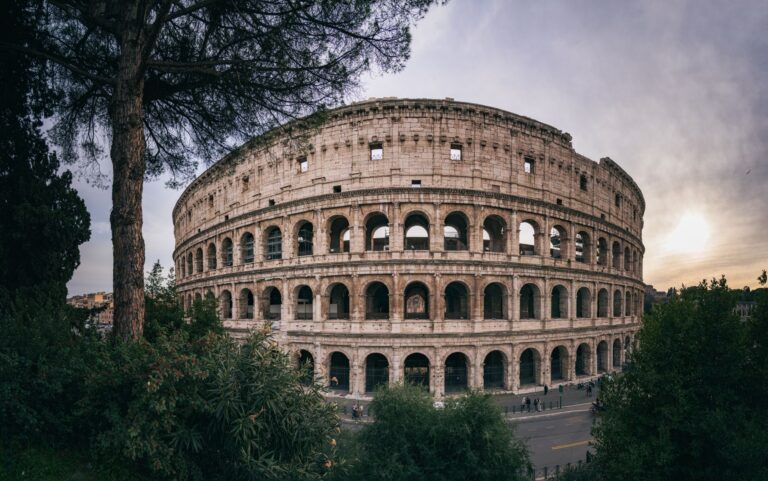
Rome’s ancient landmarks span approximately 1,200 years of construction and use, from the founding of the city traditionally dated to 753 BCE through the fall of the Western Roman Empire in 476 CE. The most recognizable monuments—the Colosseum, Roman Forum, and Pantheon—represent different periods and purposes within Roman civilization. The Colosseum, constructed between 72 and 80 CE under emperors Vespasian and Titus, served as an amphitheater for gladiatorial combat and public spectacles, while the Pantheon, completed around 126 CE under Emperor Hadrian, functioned as a temple dedicated to all gods and remains one of the best-preserved Roman structures.
Approximately 2.7 million people visit the Colosseum annually, making it one of the world’s most visited monuments. The Roman Forum, which served as the political, commercial, and social center of the Roman Republic and Empire from roughly the 7th century BCE through the 4th century CE, sprawls across 135 acres and contains the ruins of numerous temples, basilicas, and government buildings that visitors can explore with archaeological context.
Practical Visiting Strategies for Maximum Efficiency
Rome’s ancient sites cluster in three main geographic areas, allowing visitors to organize their itineraries by location rather than attempting to see everything in one day. The first area encompasses the Colosseum and Palatine Hill, which housed the imperial palaces and overlooks the Roman Forum; purchasing a combined ticket grants access to all three sites. The second area centers on the Pantheon and nearby temples in the Historic Center, while the third includes sites like the Circus Maximus and the Baths of Caracalla in the southern portion of the city.
Advance ticket purchases eliminate long queues and allow visitors to enter at specific times. The Colosseum typically requires 2-3 hours for a thorough visit including time in the underground chambers, known as the hypogeum, where animals and gladiators were held before performances. Morning visits before 10 AM or afternoon visits after 3 PM generally attract fewer crowds than midday hours.
Decoding Architectural Features and Their Functions
Roman architecture introduced innovations that shaped building design for centuries, and recognizing these features enhances understanding of how ancient structures functioned. The arch, which distributes weight more efficiently than post-and-lintel construction used in Greek buildings, appears throughout Roman landmarks and allowed architects to span greater distances and build taller structures. The vault, an extended arch forming a tunnel-like ceiling, and the dome, a hemispherical vault, enabled Romans to enclose large interior spaces without internal supporting columns.
The Pantheon’s dome, measuring 142 feet in diameter, remained the world’s largest unreinforced concrete dome until the 20th century. Its oculus, a circular opening at the dome’s apex, provided light and allowed rain to drain through channels in the floor, demonstrating Roman engineering sophistication and understanding of water management.
Historical Development and the Rise of Imperial Power
Rome’s transition from republic to empire fundamentally shaped its architectural legacy, with monuments reflecting each period’s political priorities and resources. During the Republic (509-27 BCE), Romans constructed temples and civic buildings reflecting democratic values, while the Imperial period (27 BCE-476 CE) saw emperors commissioning massive public works to demonstrate their power and provide entertainment and services to citizens. Augustus, Rome’s first emperor, famously claimed to have found Rome a city of brick and left it a city of marble, reflecting the ambitious building programs that characterized imperial rule.
The construction of the Colosseum required approximately 100,000 cubic meters of travertine stone, 300,000 man-days of labor, and roughly eight years to complete. Emperor Titus inaugurated the structure with 100 days of games featuring gladiators, wild animals including lions and elephants, and even mock naval battles staged in the flooded arena, demonstrating the spectacle and resources the imperial system commanded.
Frequently Asked Questions
How long should visitors plan to spend at Rome’s ancient landmarks?
A minimum of three full days allows visitors to explore the Colosseum, Roman Forum, Palatine Hill, Pantheon, and nearby temples with adequate time for understanding their significance. Those with greater interest in archaeology or Roman history benefit from five to seven days to include sites like the Baths of Caracalla, Circus Maximus, and the Vatican Museums, which contain artifacts from Roman excavations.
What is the best way to navigate the Roman Forum without getting lost?
Purchasing a guidebook or downloading a detailed map application before arrival helps visitors identify structures among the ruins. Guided tours, typically lasting two hours, provide archaeological context and help visitors understand which ruins correspond to which historical buildings, though independent exploration with a map also allows for self-paced discovery.
Are Rome’s ancient sites accessible for visitors with mobility limitations?
The Colosseum and Pantheon provide wheelchair access to ground-level areas, though the Roman Forum and Palatine Hill contain uneven terrain and stairs that present challenges for visitors with mobility issues. Visitors should check specific accessibility information for each site when planning their itineraries, as restoration work occasionally affects access routes.
Rome’s ancient landmarks offer tangible connections to a civilization that shaped law, engineering, architecture, and governance across the Western world. Understanding the chronology, functions, and architectural innovations of these monuments transforms a visit from sightseeing into an engagement with history that remains relevant to contemporary life.
