
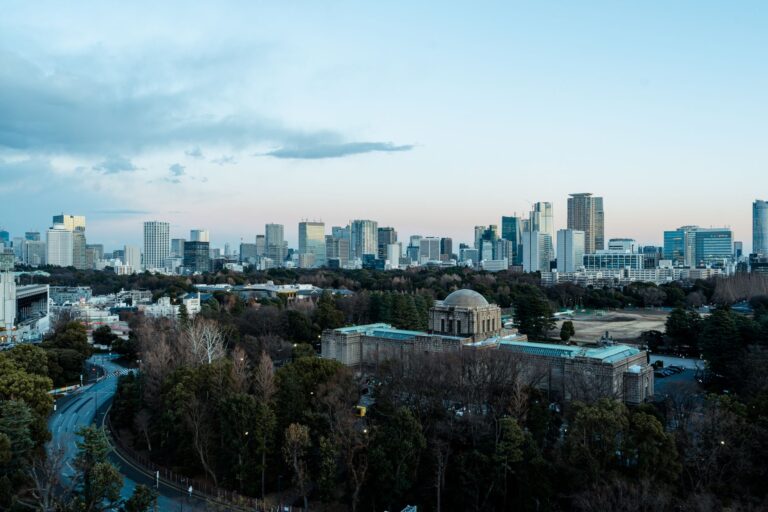
Tokyo ranks among the world’s most visited cities, attracting millions of international travelers annually who navigate its complexity with varying degrees of preparation. First-time visitors often feel overwhelmed by the city’s scale—its 37 million metropolitan residents, 23 special wards, and seemingly infinite neighborhoods—yet structured planning transforms this sprawl into manageable districts. Understanding how to organize your approach to Tokyo before arrival determines whether you experience the city as chaotic or exhilarating.
Understanding Tokyo’s Geography and Ward System
Tokyo’s administrative structure divides the city into 23 special wards (ku), each functioning as distinct neighborhoods with their own character, transportation hubs, and attractions. The ward system emerged from Tokyo’s 1889 incorporation as a city, when the metropolitan government organized the urban area into manageable administrative zones. Rather than thinking of Tokyo as one city, first-time visitors should conceptualize it as a collection of interconnected neighborhoods, each worth exploring independently. Shibuya Ward contains the famous Shibuya Crossing and youth-oriented shopping districts; Chiyoda Ward houses the Imperial Palace and government buildings; Minato Ward includes the upscale Roppongi and Azabu areas; Shinjuku Ward serves as a major commercial and entertainment hub.
The Yamanote Line, a 34.5-kilometer loop railway completed in 1885, connects most major wards and provides the easiest mental framework for understanding Tokyo’s layout. This circular train line passes through approximately 30 stations, including Shinjuku, Shibuya, Shimbashi, and Tokyo Station, making it invaluable for orientation during your first days.
Transportation Planning: The IC Card and Rail System
Tokyo’s transportation network operates through an integrated rail system comprising Japan Railways (JR) trains, subway lines operated by Tokyo Metro and Toei, and numerous private railway companies. The system’s complexity intimidates newcomers, but purchasing an IC card—a rechargeable smart card that works across nearly all transit systems—eliminates most navigation stress. The Suica and Pasmo cards function identically; you load them with yen at ticket machines or convenience stores and simply tap them at gates. Most visitors load between 3,000 and 5,000 yen (roughly $20–$35 USD) initially, adding funds as needed.
Tokyo’s transit system carried approximately 8.7 billion passenger journeys in 2019, making it the world’s busiest metropolitan rail network by far. The Tokyo Metro alone operates 13 lines with 286 stations, while JR operates the Yamanote Loop and numerous other routes. For first-time visitors, downloading the Google Maps or Hyperdia apps enables real-time navigation; both applications show train lines, platforms, and transfers with remarkable accuracy. A single journey typically costs between 170 and 320 yen depending on distance.
Accommodation Strategy and Neighborhood Selection
Choosing where to stay shapes your entire Tokyo experience, as different wards cater to different traveler types and budgets. Business hotels in central wards like Shinjuku or Shibuya charge premium prices but offer unbeatable location; guesthouses and hostels in outer wards like Asakusa or Ueno provide budget-friendly alternatives with character. The Airbnb platform offers numerous short-term rentals throughout Tokyo, though Japanese regulations limit availability in some areas. Consider your priorities—proximity to nightlife, access to museums, shopping opportunities, or proximity to the airport—when selecting your base neighborhood.
Asakusa Ward, home to the Sensoji Temple (completed in 645 CE and rebuilt in 1958 after World War II bombing), attracts visitors seeking traditional Tokyo atmosphere combined with budget accommodations. Conversely, Minato Ward’s Roppongi and Azabu areas cater to affluent travelers and expatriates, with correspondingly higher accommodation costs. Most first-time visitors benefit from staying in central Shinjuku or Shibuya for 3–4 nights, then relocating to a secondary neighborhood like Asakusa or Harajuku for variety.
Historical Context: Tokyo’s Development and Modern Planning
Tokyo’s current structure reflects centuries of urban development, from the Edo period (1603–1868) when it served as the Tokugawa shogunate’s seat, through the Meiji Restoration of 1868 that transformed it into Japan’s capital, to its post-1945 reconstruction after devastating World War II firebombing. The 1964 Tokyo Olympics catalyzed modernization, spurring construction of the Shinkansen bullet train and numerous highways that remain central to the city’s infrastructure today. Understanding this historical layering helps visitors appreciate why ancient temples sit blocks from neon-lit skyscrapers, and why certain neighborhoods maintain distinctive character.
The Great Kanto Earthquake of 1923 destroyed much of Tokyo, killing over 100,000 people and necessitating complete urban reconstruction. This tragedy led to the implementation of strict building codes and urban planning principles that prioritized safety and efficiency—standards that continue informing Tokyo’s development. The city’s resilience and systematic rebuilding after this catastrophe established patterns that repeated after 1945, creating the modern Tokyo visitors experience today.
Frequently Asked Questions
How many days do I need for a first Tokyo visit?
Most first-time visitors spend 4–7 days in Tokyo, allowing time to experience major attractions, adjust to jet lag, and explore multiple neighborhoods without excessive rushing. A minimum 3-day itinerary covers essential sites like Senso-ji Temple, Shibuya Crossing, and Meiji Shrine, while a full week permits deeper exploration of museums, parks, and secondary neighborhoods.
Do I need to speak Japanese to navigate Tokyo?
English signage appears throughout central Tokyo’s major stations and tourist areas, and most young Japanese people speak functional English. Translation apps like Google Translate handle restaurant menus and street signs effectively, making English-only visitors able to navigate independently with minimal difficulty.
What is the best time to visit Tokyo for first-timers?
Tokyo receives visitors year-round; spring and autumn offer comfortable temperatures and lower rainfall, while summer brings heat and humidity, and winter brings cold but clear skies. First-time visitors should prioritize personal temperature preferences and crowd tolerance over specific months, as Tokyo maintains attractions and activities throughout the year.
Planning a first Tokyo trip requires understanding the city’s ward-based geography, mastering the IC card and rail system, selecting accommodation strategically, and appreciating the historical forces that shaped modern Tokyo. With these foundational elements in place, first-time visitors transform Tokyo from an intimidating megacity into a navigable collection of distinct neighborhoods, each offering unique experiences and insights into Japanese culture and urban life.
