
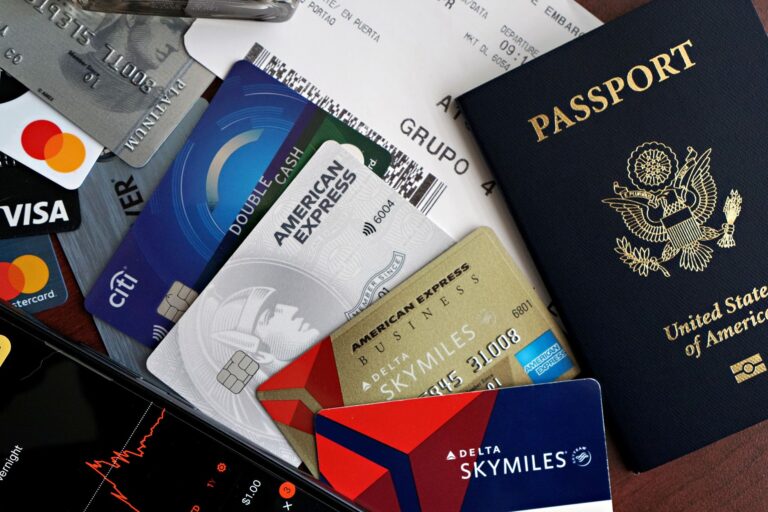
Airline mileage programs—also called frequent flyer programs—represent one of the most valuable loyalty systems available to travelers, yet most people use them inefficiently or fail to capitalize on their benefits entirely. Understanding how these programs accumulate miles, calculate redemption values, and offer ancillary benefits can transform your travel budget and enable you to reach distant destinations at a fraction of their ticket price. This guide breaks down the mechanics of airline mileage programs and provides practical strategies for maximizing your rewards.
Understanding How Miles Accumulate
Airline mileage programs award points—measured in miles—based on the distance flown or the amount spent on a ticket. When you fly from New York to Los Angeles on American Airlines, for example, you earn miles equivalent to the actual distance traveled, typically around 2,100 miles for that route. Most programs also allow you to earn miles through credit card spending, hotel stays, car rentals, and retail purchases with affiliated partners, which often provides a faster accumulation path than flying alone.
The earning structure varies significantly by airline and program tier. United Airlines’ MileagePlus program, founded in 1981, pioneered the modern frequent flyer model and awards miles based on either distance or elite qualification miles depending on ticket type. A 2023 industry analysis revealed that credit card sign-up bonuses—typically ranging from 50,000 to 100,000 bonus miles—can provide the equivalent of two to five free flights without stepping foot on an airplane.
The Redemption Process and Award Chart Mechanics
Redemption occurs when you convert accumulated miles into free flights, upgrades, or other benefits through your airline’s award chart, which lists the mileage cost for each route based on distance bands or zones. A short domestic flight within the United States typically costs 5,000 to 25,000 miles, while international long-haul flights can range from 50,000 to 150,000 miles or more depending on the destination and cabin class. The redemption value fluctuates based on demand, with peak travel periods requiring more miles for the same route than off-peak periods.
Delta Air Lines’ SkyMiles program introduced dynamic pricing in 2015, meaning award availability and pricing adjust based on demand rather than maintaining fixed mileage costs. This system allows budget travelers to find exceptional value on unpopular routes or dates—sometimes redeeming flights for significantly fewer miles than the published average—while making popular routes more expensive during high-demand periods.
Premium Cabin Redemptions and Transfer Partners
Business and first-class redemptions offer disproportionate value compared to economy bookings, making them attractive targets for mileage redemption strategies. A business-class flight to Europe typically costs 100,000 to 150,000 miles through most airline programs, yet the same ticket purchased with cash can exceed $5,000 to $10,000, yielding a redemption value of five to ten cents per mile—substantially higher than the one to two cents per mile typical of economy redemptions. Many programs also allow you to transfer miles to partner airlines and hotel chains, opening additional redemption opportunities that may offer better value than direct airline bookings.
American Airlines’ AAdvantage program maintains partnerships with over 1,000 hotels and car rental companies, plus access to 28 airline partners through one-way transfers. A traveler holding 100,000 AAdvantage miles might find better value transferring 80,000 miles to a partner airline for a premium cabin seat than redeeming all 100,000 directly with American for an economy award.
The Evolution of Airline Mileage Programs
Frequent flyer programs emerged in the 1970s as a competitive response to airline deregulation, with American Airlines launching AAdvantage in 1981 as the first major program offering mileage-based rewards. These programs evolved from simple distance-based accumulation systems into complex ecosystems involving credit cards, hotel partnerships, and dynamic pricing algorithms. By the 2010s, most major carriers had shifted from distance-based to revenue-based earning, meaning you accumulate miles based on ticket price rather than actual flight distance, fundamentally changing how budget travelers earn rewards.
Southwest Airlines maintained its distance-based model longer than competitors, awarding one point per mile flown regardless of ticket price, making budget fares on that airline particularly valuable for mileage accumulation. This approach attracted price-conscious travelers and contributed to Southwest’s distinctive position in the loyalty market throughout the 2000s and 2010s.
Frequently Asked Questions
Do airline miles expire if I don’t use them?
Most major U.S. carriers allow miles to expire after three years of account inactivity, though earning or redeeming even a single mile resets the timer. Many airlines also offer paid mile extensions or allow you to extend expiration through credit card activity or small redemptions, making complete loss of miles avoidable with minimal effort.
What’s the best way to maximize redemption value?
Redeeming miles for premium cabin international flights typically provides the highest value, often worth five to ten cents per mile compared to one to two cents per mile for economy redemptions. Alternatively, transferring miles to partner airlines or hotels can unlock redemptions that offer equivalent or superior value to direct airline bookings.
Can I combine miles from different airline programs?
Most airlines do not allow direct combination of miles across different programs, though some programs permit combining miles from household members or offer limited pooling features. Some airlines do allow mile transfers between accounts for a fee, typically around 1-2 cents per mile transferred.
Airline mileage programs remain among the most accessible paths to discounted or free travel for budget-conscious adventurers willing to understand their mechanics. By strategically accumulating miles through both flight activity and credit card spending, carefully timing redemptions for premium cabins, and leveraging transfer partners, travelers can unlock tickets worth thousands of dollars while maintaining flexibility for spontaneous trips to Brazil, Southeast Asia, or any global destination.
